
The public route runs from Training through Fair Trial and Unfair Trial to Ranked, while multiplayer is a separate 2–8 company tournament with shared markets and standings. Keep each rule tied to its mode and source version.
Read the single-player route as a sequence
The official route is Training → Fair Trial → Unfair Trial → Ranked. The current public rules state that three battles without a win end a journey. Fair is identified as the point that unlocks boss battles and Deed spending; Unfair is identified with Old Man and later leader-trait unlocks.
These are verified route and unlock statements, not evidence that a particular unit, item, or formation is mandatory. Use the Beginner's Guide for the practical decision loop and the Unit, Gear, and Faction records to inspect the data behind a plan.
- Training → Fair Trial → Unfair Trial → Ranked.
- Three battles without a win end the current journey.
- Fair is the published unlock point for boss battles and Deed spending.
Treat the Ranked threshold as unresolved
The current official modes page contains a source conflict: its prose says Ranked begins at Soldier: 200, while its threshold list says Soldier: 100. The archive records both statements and does not select one without a newer official or in-game confirmation.
The same threshold list names Peasant 0, Squire 300, Knight 500, Veteran 700, Marshal 900, High Marshal 1,150, and Champion 1,400. Those values should be read as a versioned public reference rather than a performance ranking or a prediction of which company will climb fastest.
- Soldier: 200 in prose; 100 in the published threshold list.
- Label a Ranked claim with its game version and source.
- Verify the live game when a public source conflicts with itself.
Multiplayer is a shared-market tournament
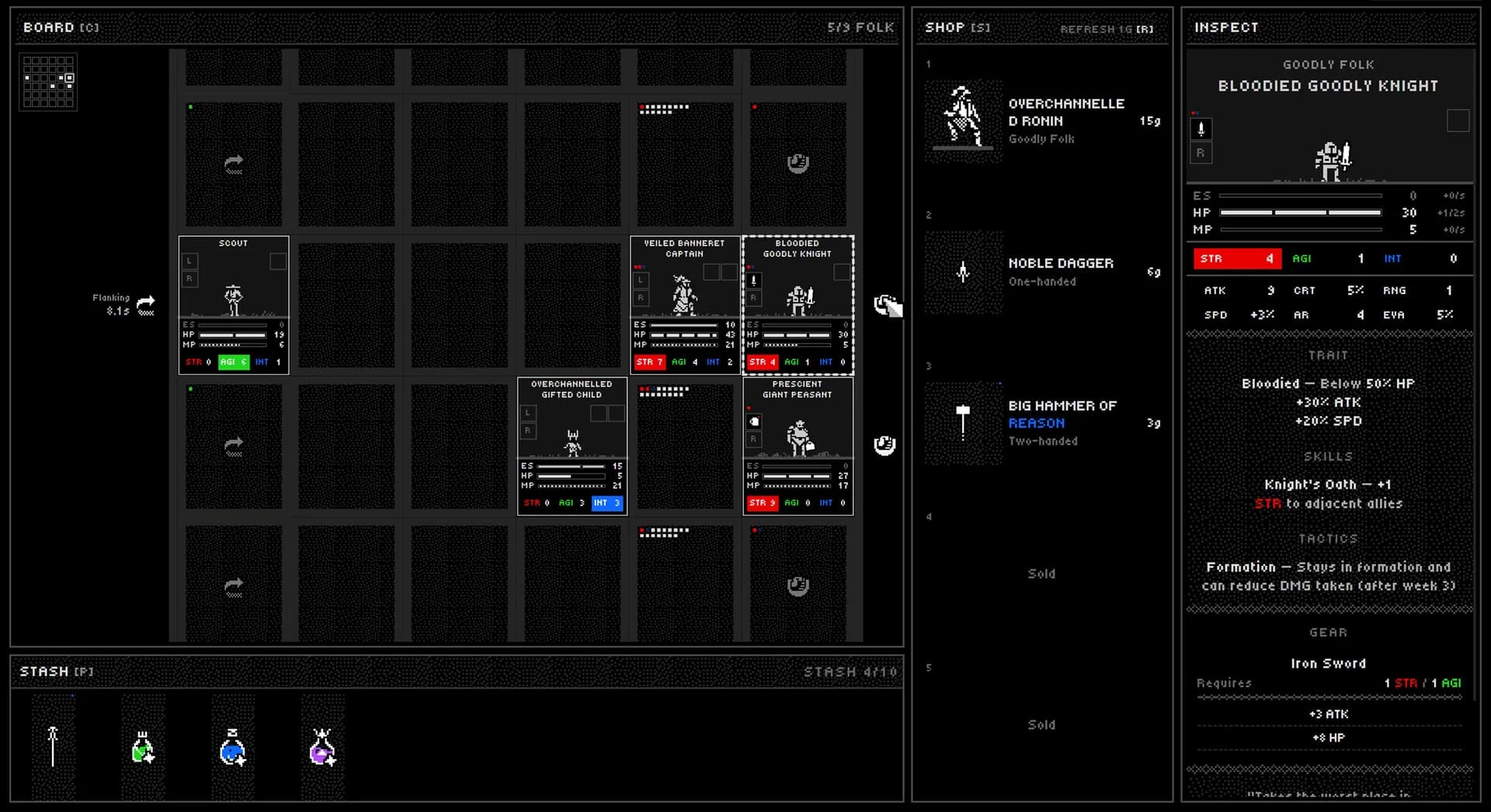
The public multiplayer description supports 2–8 companies, with humans and AI able to share the table. A host chooses how often companies meet; players bid in a shared market, prepare their lines, fight, and follow standings until one champion remains.
Contested items open at list price and players raise or pass. Mixed-faction lobbies can also auction units. These rules change the meaning of a purchase: an item can be a fit for your company, a contested bid, or both, so do not carry a single-player shopping assumption into a multiplayer claim.
- 2–8 companies; humans and AI can share a tournament.
- Shared markets make contested purchases live bids.
- The host's meeting frequency shapes the season before the first battle.
Use Deed and faction screens as progression context
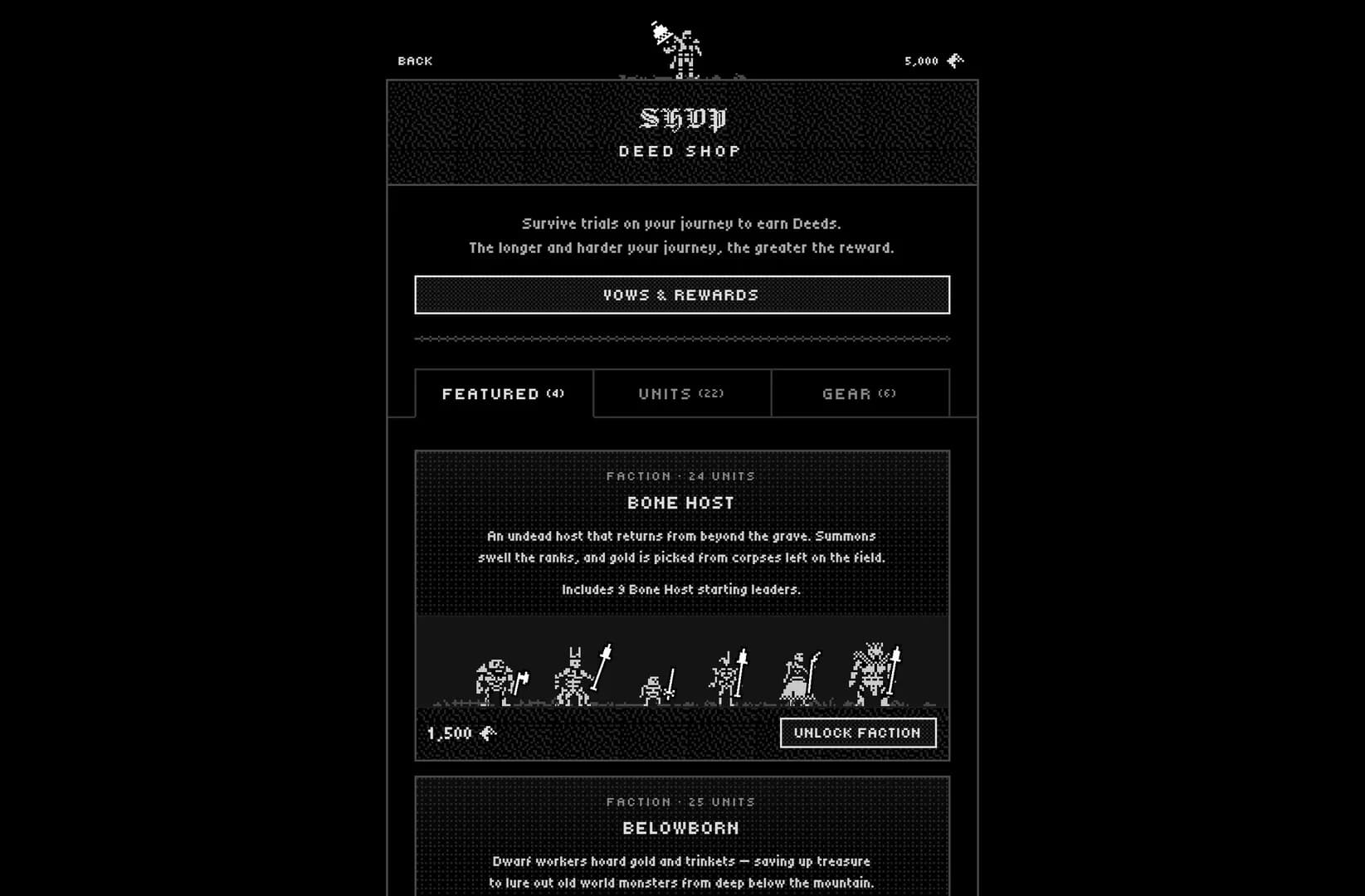
The official Deed Shop interface shows a progression surface for earning Deeds through a journey and spending them on rewards. It supports the published statement that progression can unlock later content, but it does not by itself prove every reward, cost, or complete faction roster in the current build.
When a progression screen names a faction or unit, open the Factions and Units archives for the portion of that record that is publicly auditable. Keep name-only artwork, complete public cards, and editorial build ideas as separate layers.
- Use the progression screen as a source for what it visibly states.
- Do not infer a complete unlock catalogue from one screen.
- Open the linked record before treating an unlock as a full stat or ability card.