
Start with a leader, read the available Unit and Gear records, then repeat Shop → Place → Equip → Battle → Plan. Three battles without a win end the current journey, so each purchase and position should have a stated job.
What a first run asks you to do
The public game flow is a repeating decision loop: inspect the shop, place a company, equip compatible Gear, then let combat resolve before planning again. The important beginner skill is not memorising a fixed build; it is checking whether the next choice has a legal slot, a useful position, and a clear purpose.
Training leads into Fair Trial, then Unfair Trial and Ranked. The current public rules state that three battles without a win end a journey. Treat the road as a sequence of small revisions rather than a promise that one opening arrangement will remain correct.
Read the card before buying or placing
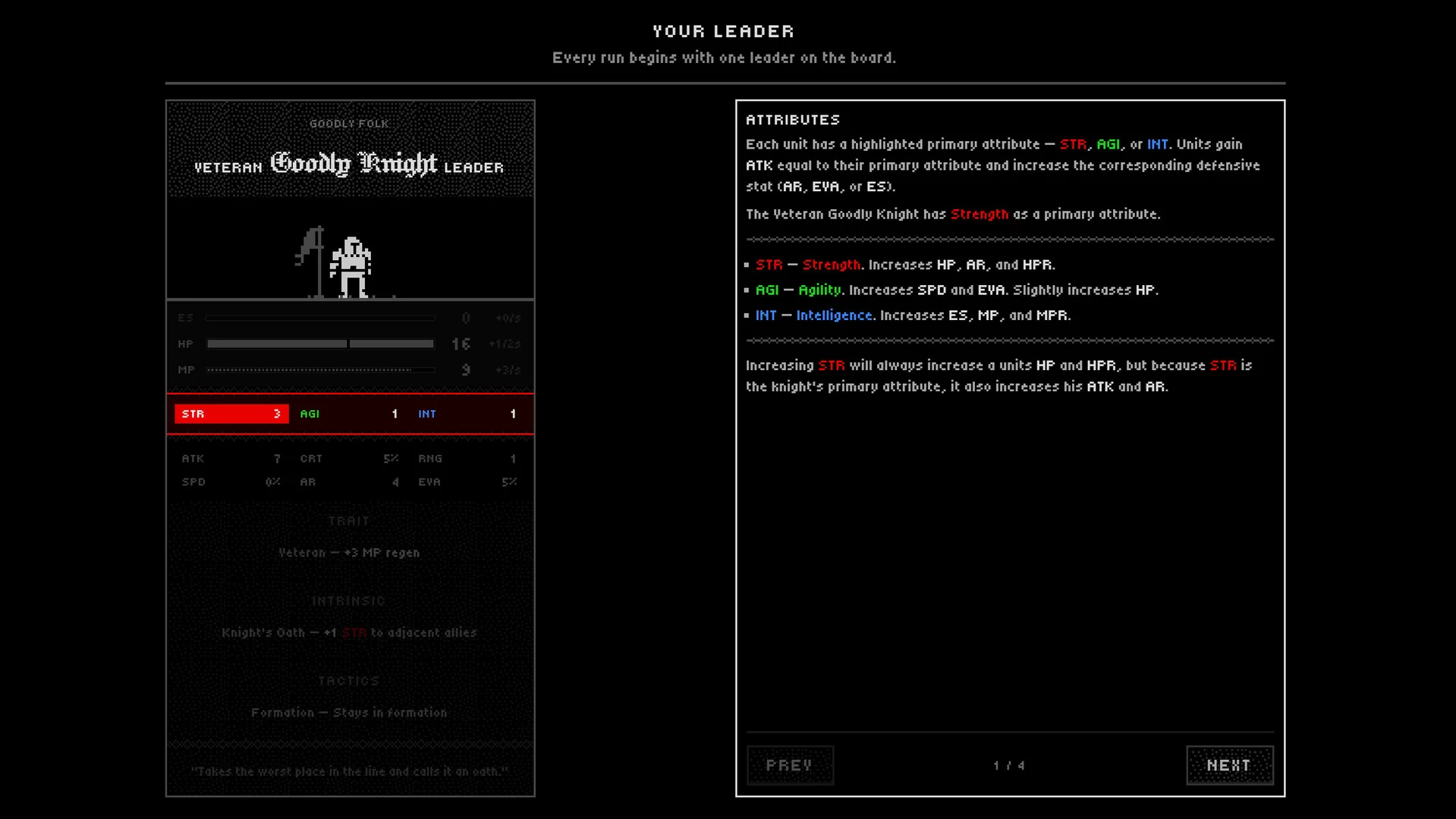
A public Unit card combines resources, attributes, combat values, a Trait, skills, a tactic, and Gear or Trinket capacity. HP, ES, and MP answer different survival or casting questions; STR, AGI, and INT are attributes; ATK, CRT, RNG, SPD, AR, and EVA describe combat behavior. None of those values alone proves that a unit belongs in a particular cell.
For a concrete check, compare the Goodly Knight's Formation tactic and adjacent-ally skill with the Archer's Backline tactic and range. Then inspect an item such as Iron Sword of Brawn or Feather Charm of Reflex for its requirement and slot type before calling it a fit. This is a data check, not a best-in-slot claim.
Make one decision at each step
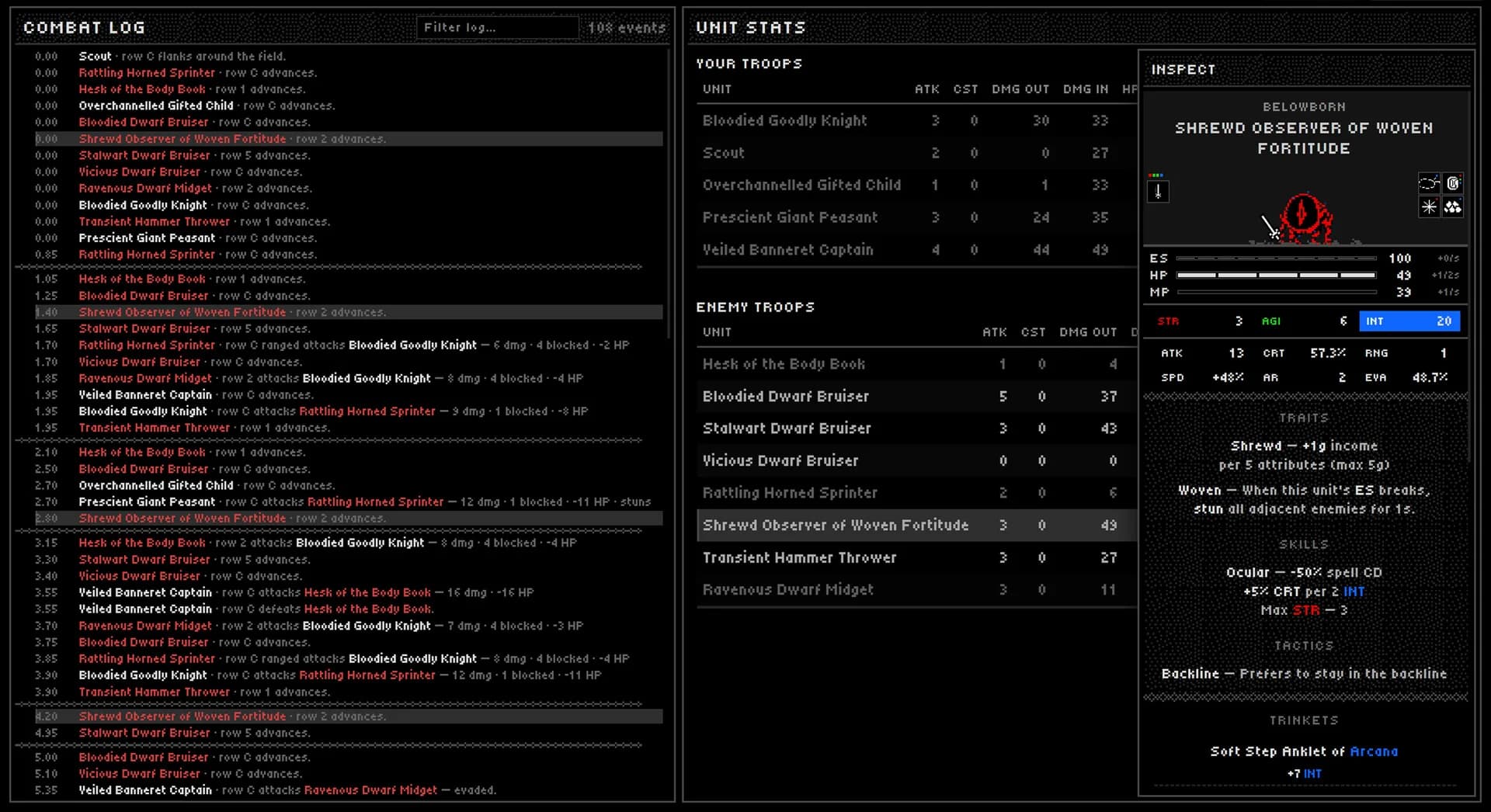
At the shop, first confirm the item's requirement and the intended bearer's capacity. At placement, first read the tactic, range, and adjacent effects. At equipment, verify that the item actually occupies the slot you think it does. After combat, revise the board from the observed result instead of assuming a loss means one stat must be raised.
The Company Builder is useful as a planning surface because it exposes leader choice, open cells, unit cards, and known equipment capacity together. It is not a combat simulator or a proof that a company will win; use it to make a decision legible before testing it in the game.
- Shop: requirement, cost, and intended bearer.
- Place: tactic, range, adjacency, and the opposing line.
- Equip: hand or Trinket capacity, then the published effect.
- Plan: record what changed and check the next active board cells.
Spend from verified constraints
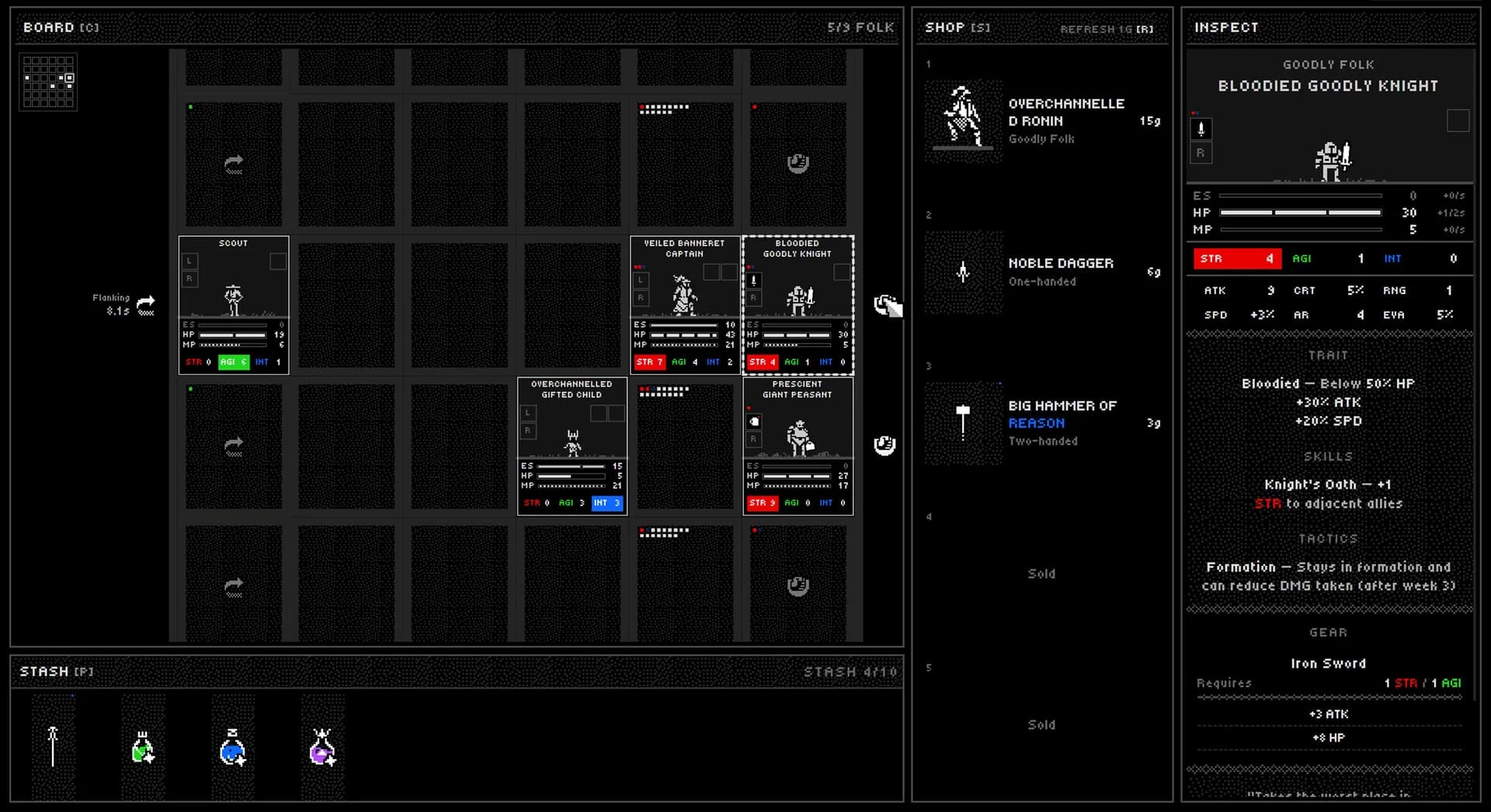
An item is a real option only after its published requirement, cost, effect, and intended slot all line up. One-handed Gear leaves another hand available; two-handed equipment consumes both hands; Trinkets use their own capacity; spell tomes spend MP; and potions change a companion once without occupying a slot. Check the Gear record instead of inferring a slot rule from the icon alone.
Some public effects mention income or scaling, but an example is not a universal economy rule. Feather Charm of Reflex and Ruby Charm of Wit list income bonuses, while Portly Knight's Hoarding Trait refers to several equipment types on the board. The relevant card and item records explain the exact published wording.
- Confirm the attribute requirement before treating a shop item as usable.
- Reserve the correct Gear or Trinket slot before buying for a later bearer.
- Separate a listed effect from an assumption about shop availability or value.
Avoid the common early assumptions
Do not turn a public card sample into a complete roster, a fixed tier list, or a guaranteed shop sequence. Rolled attributes, mode rules, item availability, and later patches can change what is practical. This archive links to exact records when they exist and leaves missing data unpublished rather than filling the gap with plausible-looking advice.
For positioning questions, continue to the Formation & Positioning Guide. For a ready-made but editable starting layout, use Builds and then change it in the Company Builder rather than copying it as an unquestioned answer.